
What could return Nigerian Breweries to the days of hemorrhage might lie within
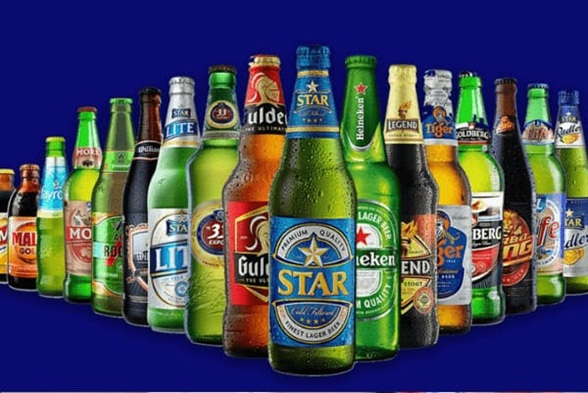
Nigerian Breweries Plc recently announced increases in price points for its products. People who watch developments in the global economy will easily agree it was time to sell a bottle for more; the IRAN versus Israel-United States war has triggered chain reactions across the world, forcing inflationary spikes across industries.
Costs of inputs have kept an upward trajectory, and any brand that asks consumers to pay a little more would only be seen as playing the game of survival. Shipping costs have soared. Cost of logistics has followed the path of petroleum products to nudge towards the skies, and the market looks like it is crying for a general review.
But questions have to be asked when brands in difficult markets commit several unforced errors that tend to keep the customers at bay even when such does not reflect on the lifestyle of the handlers. When it is suspected that the personal fortunes of the managers of a brand are inversely proportional to the brands they manage, stakeholders and observers are wont to worry.
After the close of books for the 2025 business year, Nigerian Breweries announced a 35% revenue growth from N1.08 trillion to N1.47 trillion. Profit for the year received a major rebound from the loss of N145 billion in 2024 to an impressive N69.9 billion in 2025.
Guinness Nigeria Plc, currently owned by the Tolaram Group, posted a heartwarming N41.2 billion profit, up from a loss of N54.8 billion. I was one of those who was skeptical about the willingness of the Tolaram Group to manage Guinness beer and all into profitability, but I have no choice but to take back my words, their efficient resource management and all.
The numbers for Nigerian breweries were so good that worried shareholders must still be smiling that the impressive turnaround represents long-term stability for their stakes in the business. It must be felt that the foreign exchange headwinds that were largely blamed for the slide of the past couple of years had given way to sustainable profitability.
The minders of the brands on the stable of Nigerian Breweries must be aware of the tanking consumption preference against beers in the Nigerian market. Remaining profitable as a brewer in this market requires a lot more than sampling brands; it demands investing in the brand, in the customer interaction and in deepening the demand behaviour and culture around the brand.
Is Nigerian Breweries still allocating resources to run promotions in bars to support the traffic of stock and inventory to their direct customers?
Again, I drink beer, and I also rely on what I see in bars – the behaviour of patrons each time I am moved to interpret the industry. In most bars, it appears there is a disconnect between the company and the customers. Put more directly, there appears to be a disconnect between the ATL activities of the brands and the BTL. The creativity and refreshers in the ATL apparently are not cascaded through the BTL, as seen in many platforms of contact – bars.
The BTL material in many bars in most Nigerian urban cities of Lagos, Abuja and Enugu (I have been to these cities many times in the past 8 three months) appears to be old and in urgent need of replacement. Some of them are in misalignment with the current brand-speak and positioning.
Someone is paid to look after these things, and you can bet there is a budget for them that is not being put to work.
There is palpable decadence in trade infrastructure and collaterals everywhere.
As pointed out at the beginning, the bad fortunes of the brands run contrary to the great fortunes of some of the handlers saddled with the responsibilities of cascading topline marketing initiatives to the end users via strategic channel marketing. One of these persons has moved into 3 different houses in different parts of upscale Lagos within two years. Property costs in these places are quite steep, suggesting this staff, in denying customers of riveting point of sales collateral, is feathering his own nest. There are dead posters in many bars, dead infrastructures (chairs & tables), signages are also disappearing. In many places, you find brand artwork of more than 5 years, some of them communicating different things and confuse customers.
The odds are so stacked against the beers in the market that the present behaviour can only lead to poor fortunes going forward. Beer customers need to be coaxed, petted, into reaching for the next bottle.
Nigerian Breweries was hitherto the king of in-bar promotions. The current approach, in which they select one major open space in a big city where they host a party once every long while, cannot sell beer sustainably or support the dynamic above-the-line initiatives being experienced. While the open spaces draw huge traffic, the aggregate of the number of people who throng the smaller bars consistently far outstrips that of the one-time weekend parties. More importantly, every beer consumer wants to be treated uniquely. They want to be in the midst of personalised engagement. Hosting such pop-up experience will not cut it for him. He wants those little engagements in his own hood, even if it means pitching him to patronize his preferred brand, even if it’s just to reaffirm his preference for his own brand.
Minders of the brands at trade levels, particularly those at the channel marketing beat, need to do a bit more. You cannot be living large when the goose that lays the golden egg is starving. Except the plan is for a quick exit, investing in the brand across profitable channels, evolving occasions, and refreshing it for the long term is the only sustainable path for these brands. We are on the trail of billions of naira as they make their way into pockets and purposes other than the intended and if the situation is not arrested, the books might begin to bleed yet again.
Anything short of this and we all will be back to the pre-2023 years of shriveling numbers and endless stakeholder grief over tanking profitability. There is a limit to which the biggest shareholder, Heineken, would agree to reflate the company. Soon, they would see that the insect that’s eating the vegetable actually resides in the vegetable, and that discovery might lead to consequences that could be very public and unpleasant.




Engr. Harrison
What a wonderful observation and submission from a brand professional 👍
Eze Osita
Robust analysis. He who has ears, let him hear.
Victor Ezeja
Quite an insightful analysis of the situation in the Nigerian brewery market, highlighting urgent proactive steps NBL needs to take to avoid returning to losses it recorded three or two years ago
Paulinus Ikechukwu Ogara
Great as always. Well-done, Mr Okuhu.
Comrade Sam Okwa
Yes, you are alive to your environment. The neglect of these nectars that draw the butterflies to the flowers, fingers on the hilt of the sword of destruction. Time will certainly prove you right. Thumbs up for this observation.
Dan Obi -Institution
Great piece. I hope the listeners see this as advice for greater fortunes rather than attack. It is an an advice from a man with insight.
Chidi
Now, how could any normal human being say that sort of thing? Worse still, who, in their right minds, speaks that way to their people?
Jude is a sorry ass.
Sadly, with thr passing of Ideke there’s no strong rallying point to challenge these guys to a stand still at the moment
But the masses still will surprise them.
Asadu Ikem
Thanks Ikem.
You captured it all.
This industry of brewing has spanned decades and the customers have spanned centuries.
I can reflect the period of early 80’s to now, with respect to the beer (lager and non lager) brands. One thing is clear, the customer base, remain loyal and faithful to the industry, more than the industry is to it the customers.
One is leading the way while the other is helplessly following, the industry is leading a totally helpless community of consumers, the customers.
The disconnect you mentioned, is further stemmed by the system, the govt wobbling standards and the non efficient economy of country over the years.
Some fine brands couldn’t hold onto the shaky wagon of the industry, so they debaorded unintentionally, yes, I remember, Skol, Dubic, Greenland Shandy, Bergedorf, Pal, Monarch and a few more, all gone.
You rightly mentioned that the system can be regenerated from within and maintain the ever faithful customer community.
Keep up the great job.
𝑪𝒉𝒊𝒃𝒖𝒆𝒛𝒆 𝑶𝒏𝒂𝒉
𝑰 𝒉𝒂𝒗𝒆 𝒂𝒍𝒘𝒂𝒚𝒔 𝒍𝒐𝒐𝒌𝒆𝒅 𝒇𝒐𝒓𝒘𝒂𝒓𝒅 𝒕𝒐 𝒓𝒆𝒂𝒅𝒊𝒏𝒈 𝒂 𝒅𝒆𝒕𝒂𝒊𝒍𝒆𝒅 𝒂𝒏𝒂𝒍𝒚𝒔𝒊𝒔 𝒍𝒊𝒌𝒆 𝒕𝒉𝒊𝒔 𝒘𝒉𝒊𝒄𝒉 𝒉𝒂𝒔 𝒂 𝒑𝒐𝒕𝒆𝒏𝒕𝒊𝒂𝒍 𝒐𝒇 𝒕𝒓𝒊𝒈𝒈𝒆𝒓𝒊𝒏𝒈 𝒔𝒕𝒓𝒂𝒕𝒆𝒈𝒊𝒄 𝒓𝒆𝒗𝒊𝒆𝒘 𝒐𝒇 𝒃𝒐𝒕𝒉 𝒕𝒉𝒆 𝒅𝒆𝒎𝒂𝒏 𝒂𝒏𝒅 𝒔𝒖𝒑𝒑𝒍𝒚 𝒔𝒊𝒅𝒆 𝒂𝒄𝒓𝒐𝒔𝒔 𝒕𝒉𝒆 𝒃𝒓𝒂𝒏𝒅 𝒗𝒂𝒍𝒖𝒆 𝒄𝒉𝒂𝒊𝒏 𝒐𝒇 𝒕𝒉𝒆 𝑵𝒊𝒈𝒆𝒓𝒊𝒂𝒏 𝒃𝒓𝒆𝒘𝒆𝒓𝒚.
𝒀𝒐𝒖 𝒉𝒂𝒗𝒆 𝒅𝒐𝒏𝒆 𝒏𝒐𝒃𝒍𝒆.
𝑮𝒓𝒆𝒂𝒕 𝒋𝒐𝒃.
Ikechukwu Ugwuja
From the desk of a sound professional. Well done Mr Okuhu